Strength training, also called resistance exercise, is one of the two main types of activity recommended for most adults with diabetes, alongside aerobic activity such as walking. It works your muscles, and muscles are a major place where your body uses glucose. This guide covers why it matters, how often to do it, and how to start safely.
Key takeaways
- Most adults are advised to do muscle-strengthening activity at least 2 days a week, and diabetes guidance commonly suggests 2 to 3 non-consecutive days.
- You do not need a gym. Body weight, a chair, a wall and resistance bands are enough to begin.
- Start light, move slowly and keep good form before adding weight.
- Know your hypoglycemia risk, especially if you use insulin or a sulfonylurea, and talk with your care team first.
Why strength training matters with diabetes
Working muscles take up glucose from the blood, and regular resistance training is linked to better insulin sensitivity over time. Research summarized in the American Diabetes Association (ADA) Standards of Care supports resistance exercise as part of a weekly routine for adults with type 1 and type 2 diabetes. Results vary from person to person, so treat these as possible benefits, not guarantees.
Strength also helps with everyday life: climbing stairs, carrying groceries and getting up from a chair. Keeping muscle matters more as we age, and balance work can help lower the risk of falls.
How often and how much
The US Centers for Disease Control and Prevention (CDC) advises adults to do muscle-strengthening activity at least 2 days a week, on top of 150 minutes of moderate aerobic activity (or 75 minutes of vigorous activity). Diabetes guidance typically describes 2 to 3 sessions per week on non-consecutive days, working the major muscle groups.
A simple beginner session looks like this:
- 5 minutes of easy warm-up, such as marching in place.
- 6 to 8 exercises, 1 to 2 sets of 8 to 12 repetitions each.
- Rest about 1 to 2 minutes between sets.
- 5 minutes of gentle stretching.
Aim for an effort that feels moderate: the last couple of repetitions should feel challenging but not painful, and you should still be able to breathe and talk.
Easy moves to begin with
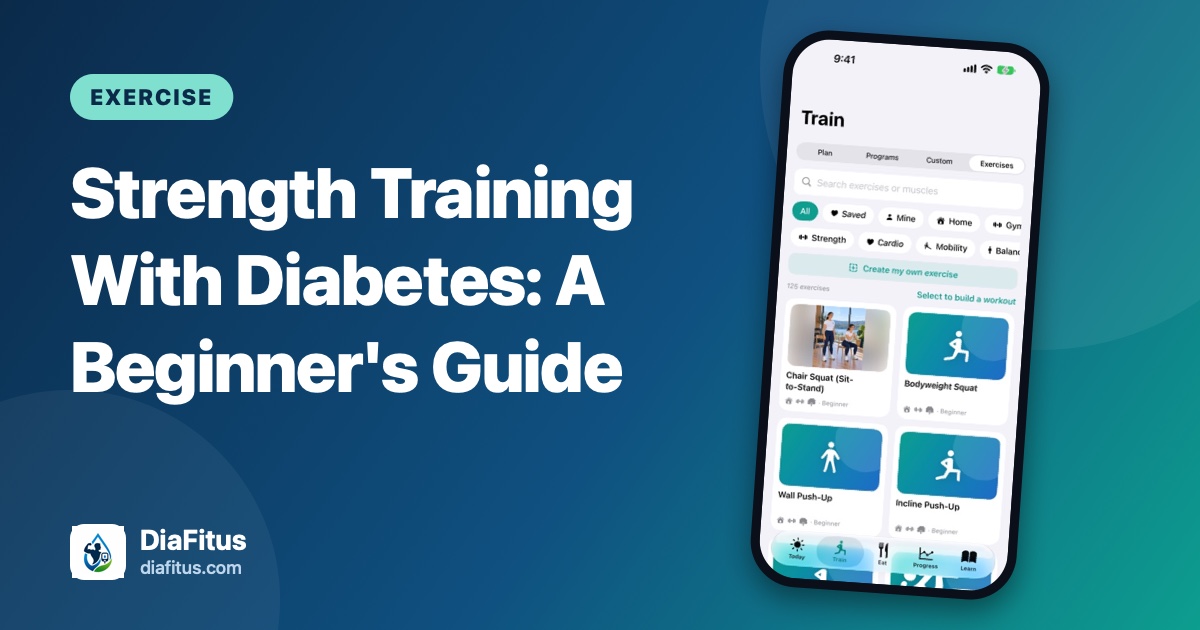
- Chair squat (sit-to-stand): lower to a chair and stand back up.
- Wall push-up: hands on a wall, bend and straighten your elbows.
- Glute bridge: lie on your back and lift your hips.
- Band row: pull a resistance band toward your ribs.
- Calf raise: rise onto your toes, holding a counter for balance.
- Bird dog or plank on knees: gentle core work.
Exercises like these are included in the beginner-friendly exercise library in DiaFitus, which you can filter for home workouts.
Staying safe: glucose and timing
Strength sessions tend to be short, and their effect on glucose can differ from long cardio sessions. Some people see glucose rise briefly during hard efforts, and others have a drop later. Learn your own pattern.
- Check before you start. If you use insulin or a sulfonylurea, ask your care team what glucose range is right to begin exercise and what to do if you are low.
- Keep fast-acting carbohydrate nearby in case of a low.
- Watch for delayed lows in the hours after training, including overnight.
- Stay hydrated and stop if you feel dizzy, shaky, or have chest pain.
- Mind your feet and eyes. If you have neuropathy, retinopathy or high blood pressure, ask your doctor which exercises to avoid, such as heavy straining.
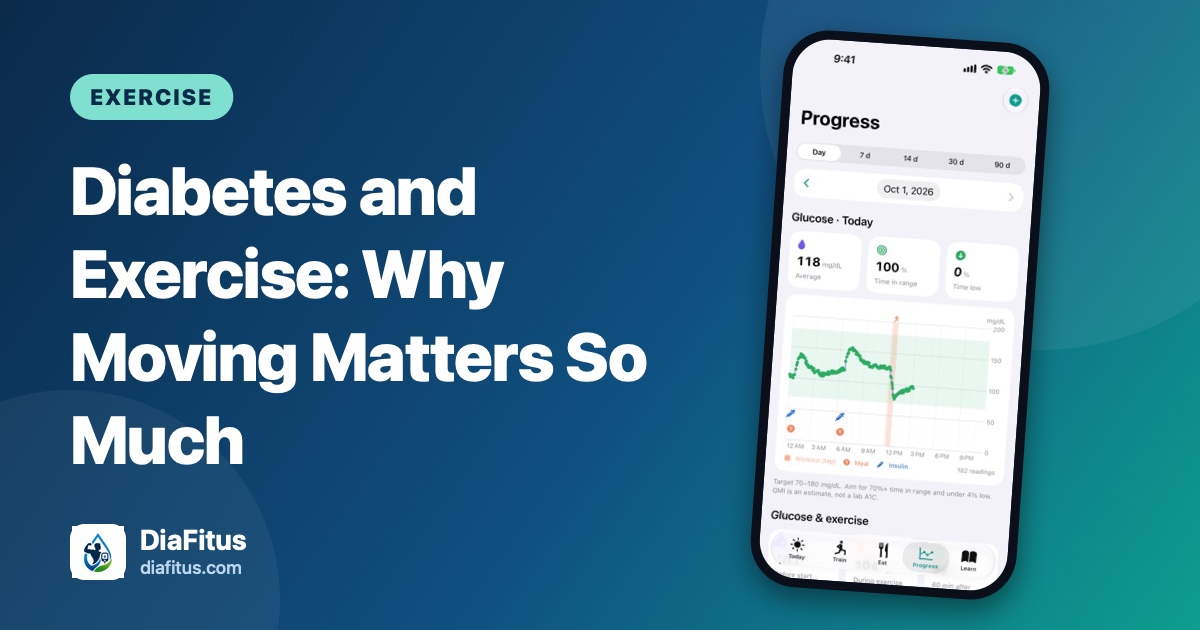
For more on how activity moves glucose, see Diabetes and Exercise: Why Moving Matters So Much and Post-Meal Walks and Diabetes.
Building up gradually
Stay at one weight and set for about two weeks. When the last repetitions feel easier and your form stays steady, add a few repetitions, then a little more resistance. Soreness for a day or two is normal at first; sharp or joint pain is not. Rest days are part of the plan.
Bottom line
Two or three short strength sessions a week, built slowly, can fit into a diabetes routine. Check with your doctor or diabetes care team before starting, particularly if you take glucose-lowering medicines or have complications. This article is educational and is not medical advice.