Yes, for many people a short walk after eating may help lower the glucose rise that follows a meal. Even a few minutes of light movement appears to matter, and you do not need a full workout to get a benefit.
Key takeaways
- Light walking after meals may reduce the post-meal glucose rise compared with sitting.
- Research suggests even 2-5 minutes can help; the American Diabetes Association has cited 15 minutes after meals for adults with type 2 diabetes.
- Effects vary from person to person, so your own glucose readings are the best guide.
- If you use insulin or a sulfonylurea, check your glucose and talk to your care team about low-glucose risk.
Why a walk after eating may help
After a meal, carbohydrates are broken down and glucose enters the blood. Working muscles take up glucose from the blood, and they can do so even when insulin is less effective. Gentle walking puts those muscles to work right when glucose is rising.
That is why timing can matter. Moving in the hour or so after eating targets the peak, not just your daily average.
What the research says
A 2022 systematic review and meta-analysis in Sports Medicine pooled seven short, one-day crossover trials. It found that breaking up long periods of sitting with light walking lowered post-meal glucose by about 17% on average compared with continuous sitting. Standing breaks lowered it by about 9.5%. Walking also improved post-meal insulin levels, while standing did not.
These were small, short studies, often with 2-5 minute breaks every 20-30 minutes. They show an immediate effect, not a long-term result.
For people with type 2 diabetes, the ADA's physical activity position statement says that interrupting prolonged sitting with light activity and about 15 minutes of walking after meals may improve glycemic control. The ADA also encourages breaking up sitting time regularly through the day.
One small randomized crossover study in 14 adults with type 2 diabetes on basal insulin compared post-meal walking (15-20 minutes after at least one meal a day for 6 weeks) with one mealtime insulin injection. Neither changed HbA1c significantly, and the authors noted the effect was small and that larger, longer studies are needed. It is a reminder that walking is a helpful habit, not a replacement for treatment.
How to try it
- Start small. A 5-10 minute easy stroll is a fine start. Build toward 15 minutes if it feels good.
- Keep it light. You should be able to talk comfortably. Around the house, up and down stairs or a loop outside all count.
- Start within about 30 minutes of finishing. Many studies used the window shortly after eating, but a walk later is still movement.
- Pick your biggest meal. If you only manage one walk a day, the meal that usually raises your glucose most is a sensible place to start.
- Make it a habit. Pair it with something you already do, like a phone call or the dog's evening walk.
Safety: know your own pattern
Light post-meal walking rarely causes lows on its own, but it can if you take insulin or a sulfonylurea, especially if you took a mealtime dose or a larger dose. Check your glucose before you go, carry a fast-acting carbohydrate, and watch for lows later, since activity can lower glucose for hours afterward.
Foot comfort matters too. Wear supportive shoes and check your feet regularly, particularly if you have neuropathy. Talk to your doctor or diabetes care team before changing your routine, especially if you have complications or take glucose-lowering medicines.
Track what works for you
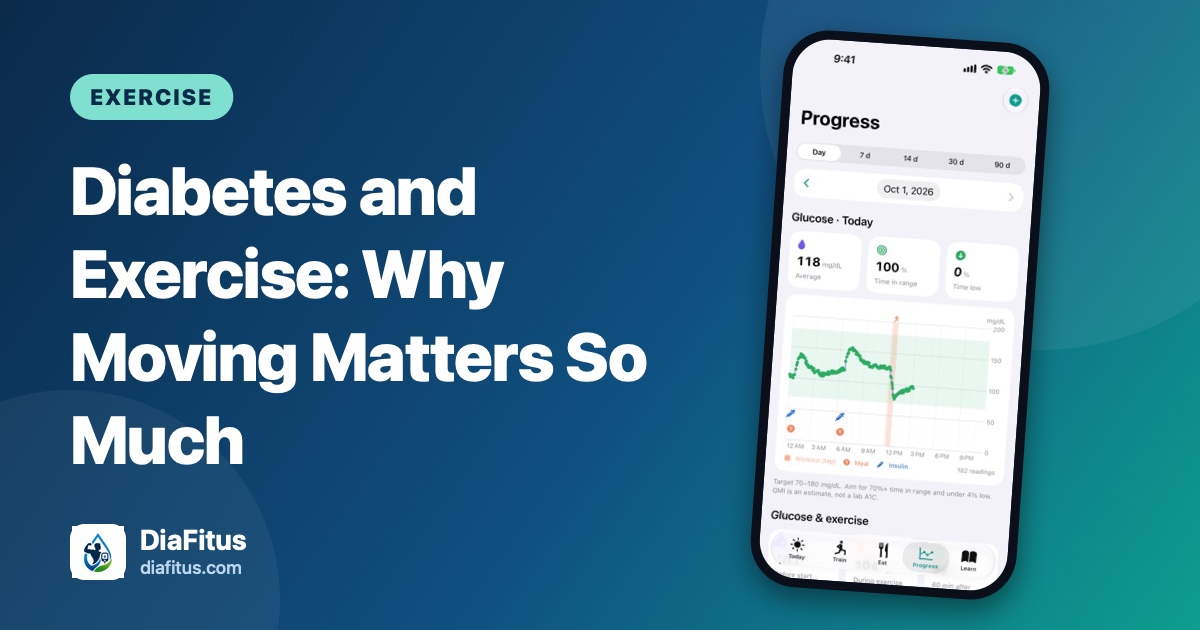
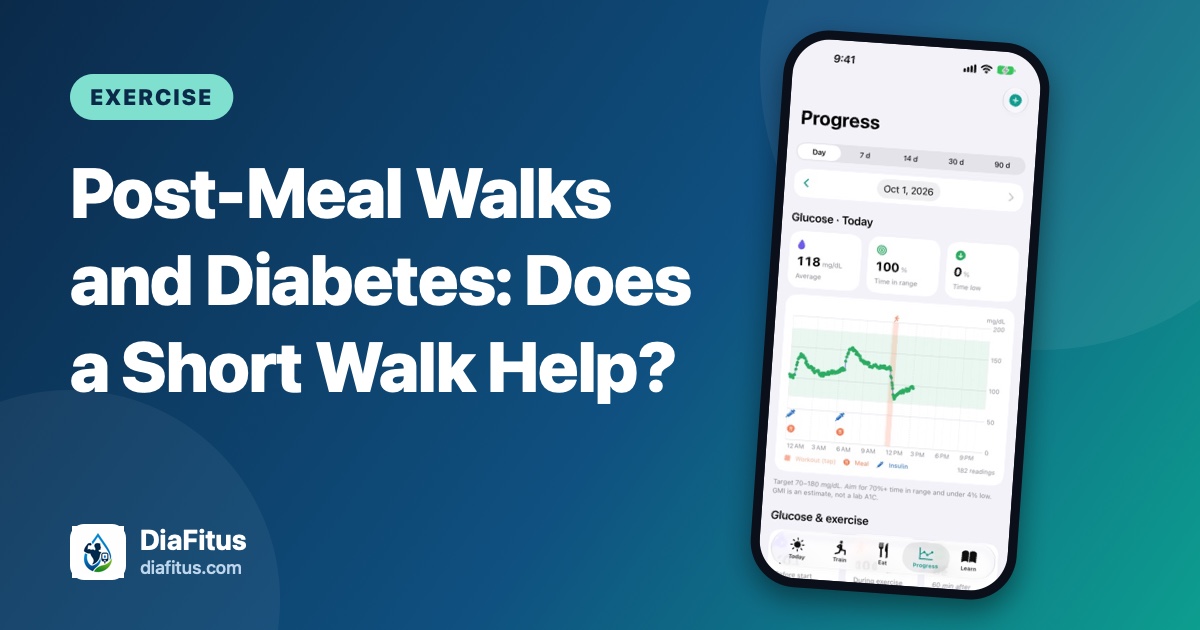
Responses differ. Compare a meal followed by a walk with a similar meal followed by sitting, using a CGM or finger-stick checks. In the DiaFitus app, you can log activity alongside your glucose and see how both line up over time. DiaFitus is an educational wellness tool; it does not diagnose or treat diabetes or replace your care team or CGM alarms.
The bottom line
A short, easy walk after a meal is one of the simplest habits to try. It is free, low-risk for most people and backed by encouraging short-term research. Treat it as a bonus on top of your regular activity and treatment plan, and let your own numbers show you how much it helps.
Related reading: Diabetes and Exercise: Why Moving Matters So Much and See What Every Workout Does to Your Glucose.