If you live with diabetes, you've probably heard "get more exercise" more times than you can count. It's good advice, but it rarely comes with an explanation. Why does movement matter so much for diabetes in particular, how much do you need, and how do you do it without ending up with a scary low? This guide answers all three in plain language.
Key takeaways
- Exercise helps your body use insulin better, and working muscles can also take up glucose without needing insulin.
- One workout can lower glucose for up to 24 hours or more afterwards, and regular activity keeps that effect going.
- The American Diabetes Association (ADA) recommends most adults aim for at least 150 minutes of moderate-to-vigorous aerobic activity a week, plus 2 to 3 resistance sessions.
- If you use insulin or certain tablets, exercise can cause lows, so checking glucose and planning ahead matters.
- Any movement counts. Breaking up long periods of sitting helps too.
Why exercise is so important when you have diabetes
Diabetes is, at heart, a problem of getting glucose out of the blood and into the cells that need it. Exercise attacks that problem from two directions.
It makes insulin work better. According to the ADA, physical activity improves insulin sensitivity, so muscle cells are better able to use whatever insulin is available to take up glucose, both during and after activity.
It works without insulin, too. The ADA also explains that muscle contractions let cells take up glucose for energy independently of insulin. That's why a brisk walk can bring glucose down even when insulin is limited or less effective.
The effect also lasts. The ADA notes that physical activity can lower blood glucose for up to 24 hours or more after a workout by making your body more sensitive to insulin. That's why consistency beats intensity: a little activity most days keeps your body responding better to insulin day after day.
Beyond glucose: what else exercise does
Most people with diabetes are also thinking about heart health, weight, energy and mood. Regular activity supports all of these. Stronger muscles give your body more room to store glucose, a fitter heart handles daily life more easily, and many people find movement helps with stress and sleep. These benefits add up alongside your glucose numbers, which is why exercise sits at the centre of diabetes care alongside food and medication.
How much exercise do you need?
The ADA's 2026 Standards of Care give clear, practical targets for adults with type 1 or type 2 diabetes:
- Aerobic activity: at least 150 minutes per week of moderate-to-vigorous activity (brisk walking, cycling, swimming), spread over at least 3 days, with no more than 2 days in a row without activity.
- Shorter, harder sessions: a minimum of 75 minutes per week of vigorous or interval training may be enough for people who are already fit.
- Resistance training: 2 to 3 sessions per week on non-consecutive days (weights, bands or bodyweight exercises).
- Sitting less: interrupt prolonged sitting at least every 30 minutes.
- Older adults: add flexibility and balance training 2 to 3 times a week.
For children and teenagers with diabetes, the ADA recommends 60 minutes or more of aerobic activity every day, with muscle- and bone-strengthening activities at least 3 days a week.
These are guideline targets, not a test you have to pass on day one. If you're new to exercise, starting with 10 minutes a day is a real win, and your care team can help you build up safely.
Why both cardio and strength matter
Aerobic exercise like walking is great for your heart and for lowering glucose during and after a session. Resistance training builds muscle, and more muscle means more tissue that can take up glucose. Doing both gives you the best of each, which is why the guidelines recommend a mix rather than one or the other.
Exercising safely: lows and what to do about them
Exercise is very safe for most people, but if you use insulin or insulin-stimulating tablets (such as sulfonylureas), glucose can drop too low during or after activity. The ADA says hypoglycaemia is more likely if you exercise for a long time or at high intensity, skip meals, or take certain medications without adjusting for the activity.
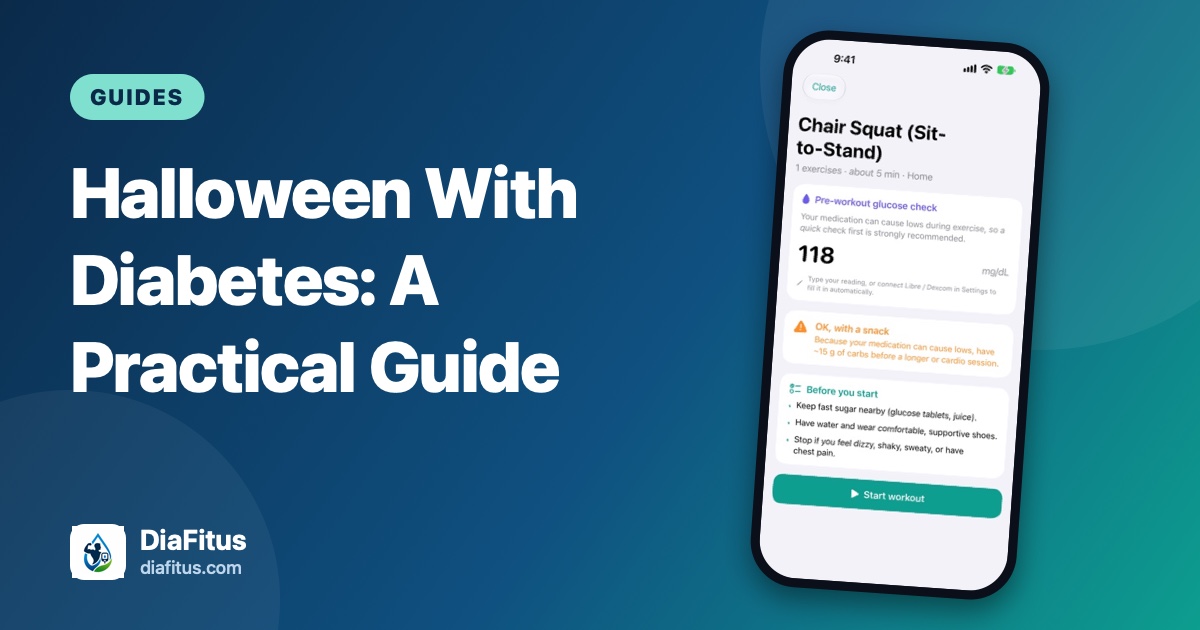
- Check before you start. The ADA stresses that checking your glucose before physical activity is important to prevent lows. Your care team can tell you the range that's right for you.
- Keep fast-acting carbs with you. The standard "15-15 rule" for treating a low is to take 15 to 20 grams of fast-acting carbohydrate, for example 4 glucose tablets or about half a cup (4 oz) of juice, then recheck after 15 minutes.
- Remember the delay. Because exercise keeps your body more sensitive to insulin for hours, lows can happen later, even overnight. Ask your team whether you should adjust food or medication after longer sessions.
- Stop and get help if you feel dizzy, shaky, confused or have chest pain.
Never change your insulin or medication on your own based on an article. Work out a plan for exercise with your doctor or diabetes care team.
How to get started this week
- Pick something you can repeat. A 10 to 15 minute walk after a meal is a simple place to start.
- Add strength twice a week. Chair squats, wall push-ups and resistance bands are gentle and effective.
- Break up sitting. Stand up and move for a couple of minutes every 30 minutes.
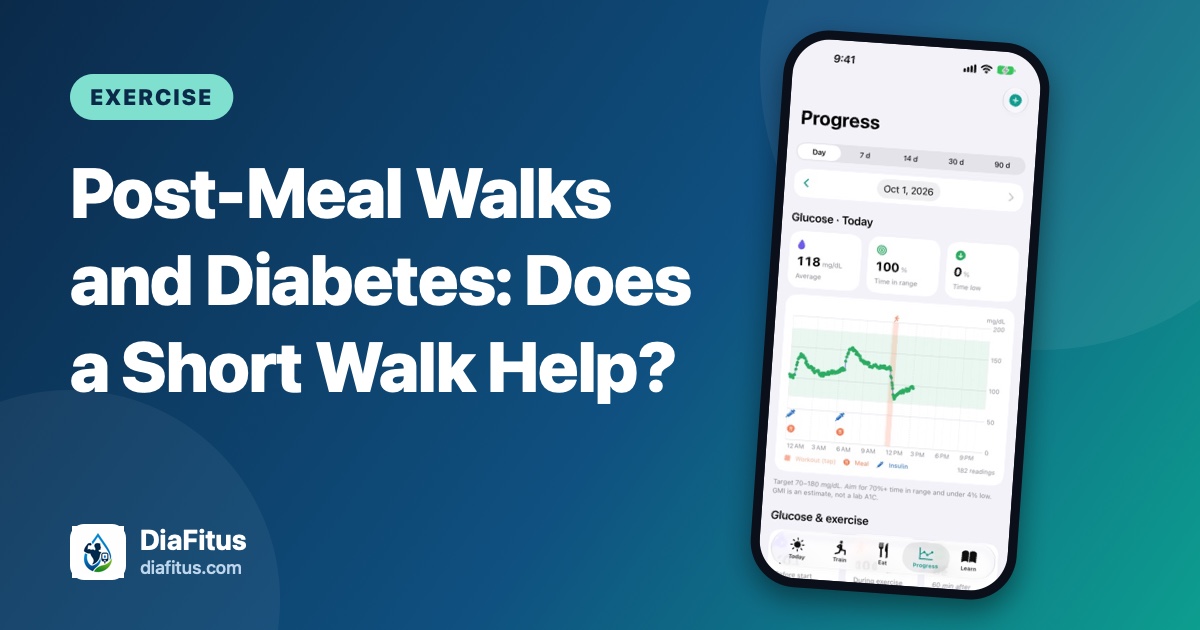
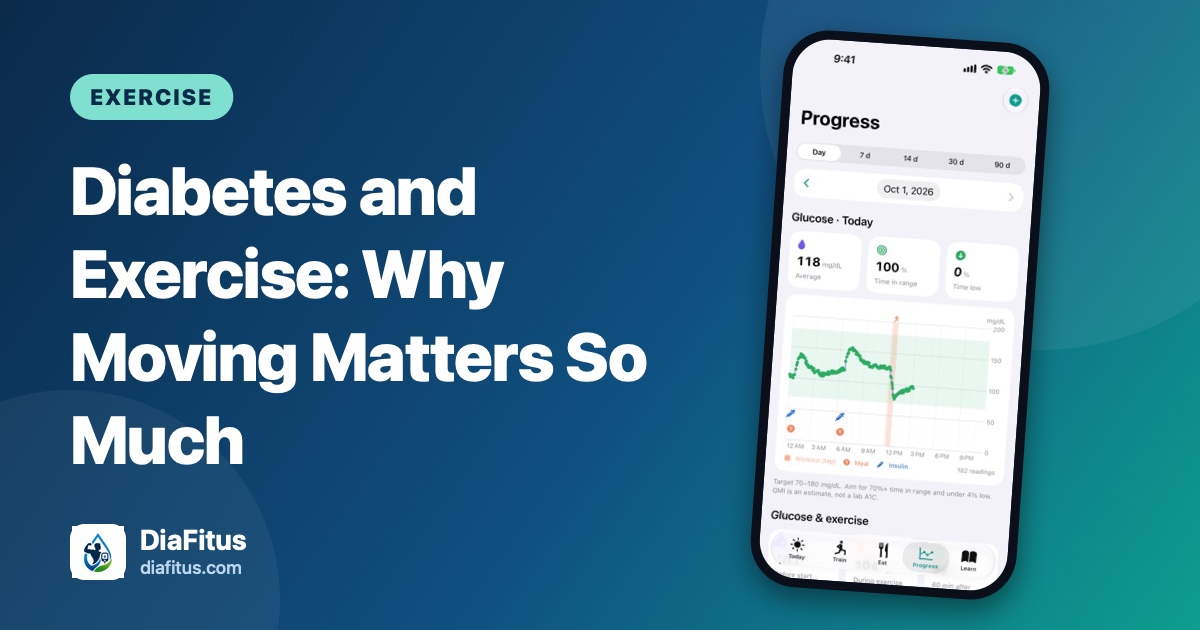
- Track what happens. Note your glucose before and after. Over a few weeks you'll learn how your own body responds.
- Tell your care team what you're doing so they can help you adjust.
Making it easier with DiaFitus
This is exactly why we built DiaFitus: a personal workout plan built around your diabetes and medication, a glucose check before every session, and a chart that shows what each workout did to your numbers. You can see how it works on our features page and read about its safety approach. DiaFitus offers general fitness guidance and does not replace your care team.