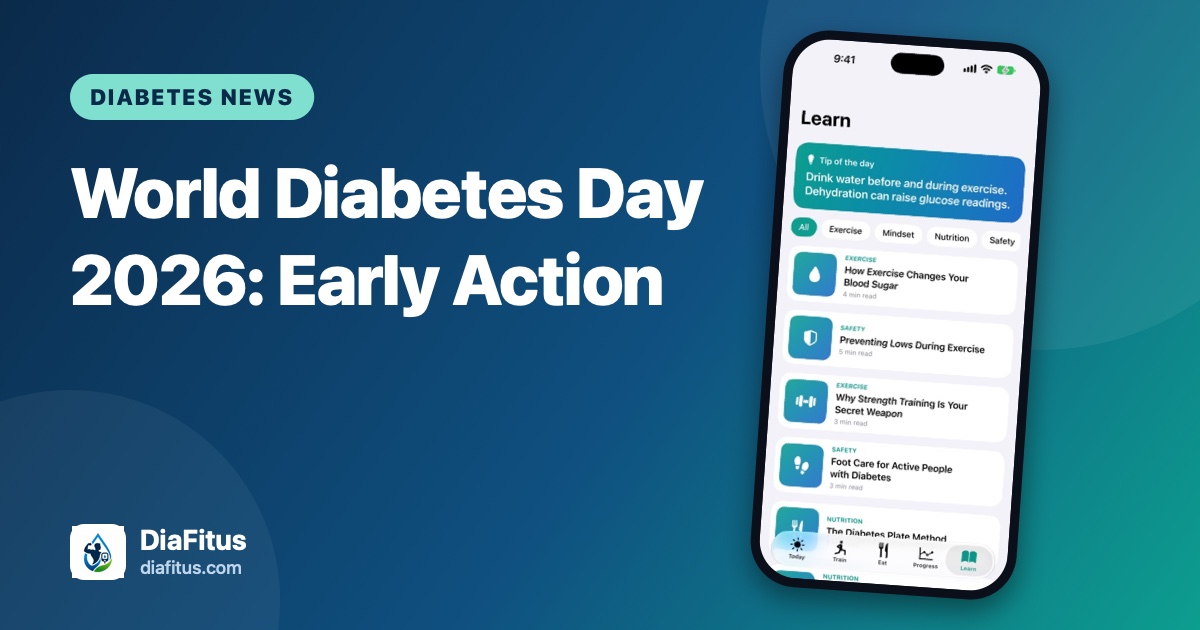
World Diabetes Day falls on 14 November, and the International Diabetes Federation (IDF) has chosen "Early action on diabetes" as the theme for its 2026-27 campaign. The focus is early diagnosis and lowering the risk of developing diabetes.
Key takeaways
- The 2026-27 theme is "Early action on diabetes", with the hashtag #ActEarlyOnDiabetes.
- The campaign says 1 in 9 adults worldwide lives with diabetes, and 853 million people are projected to have it by 2050.
- It also reports 635 million adults at high risk of type 2 diabetes, and that up to 50% of people with type 2 diabetes already have complications at diagnosis.
- Anyone can take part, from a risk test to sharing their story.
What "early action" means
According to the campaign, acting early gets people to care sooner, lowers diabetes risk and supports better health. It calls for more early detection, uninterrupted care and better risk reduction, and says this can save lives and reduce long-term costs for health systems.
In everyday terms, that means finding out sooner what is going on with your blood sugar, rather than waiting for symptoms. Type 2 diabetes can develop quietly, which is why the campaign highlights how many people already have complications when they are first diagnosed.
The numbers behind the theme
These figures come from the IDF's World Diabetes Day campaign:
- 1 in 9 adults currently live with diabetes worldwide.
- 635 million adults are at high risk of type 2 diabetes.
- 853 million people are projected to have diabetes by 2050.
- Up to 50% of people with type 2 diabetes already have complications at diagnosis.
Projections are estimates and can change as data and populations change, but the direction is clear: diabetes is one of the fastest-growing health challenges.
Ways to take part
The campaign suggests several simple actions:
- Take the type 2 diabetes risk test and share it with family and friends.
- Organise or promote a World Diabetes Day activity in your community.
- Share your own diabetes experience.
- Send a letter to national policymakers using the campaign's online tool.
What this means for you
If you do not have diabetes, a risk test and a conversation with your doctor about screening are sensible first steps, especially if you have a family history, are living with overweight, or are not very active. If you already live with diabetes, early action can also mean staying on top of check-ups and routine care.
Regular movement is one everyday habit that research links to better blood sugar management. Our guides on why exercise matters with diabetes and post-meal walks are a gentle place to start. If you take insulin or medicines that can cause lows, check your glucose and talk to your care team before changing your activity.
A note on this article
This article is for general education and is not medical advice. DiaFitus is not affiliated with the IDF. For personal advice about testing, diagnosis or treatment, speak with your doctor or diabetes care team.