Cold weather does not have to end your exercise routine. With a few adjustments, most people with diabetes can stay active all winter, indoors or out. The main things to plan for are how cold affects your glucose, your devices and your feet.
Key takeaways
- Cold is a physical stress, and the CDC notes that stress hormones can push blood sugar up. Shorter days and less movement can do the same.
- Insulin that has frozen no longer works, and cold can damage pumps and continuous glucose monitors. Keep them close to your body outdoors.
- Feet need extra attention in winter, especially if you have reduced feeling from neuropathy.
- Indoor movement counts. A home routine on icy days keeps your weekly activity on track.
How cold weather can affect your glucose
According to the US Centers for Disease Control and Prevention (CDC), cold weather stresses the body. In response, it releases stress hormones such as cortisol, which can raise blood sugar. Winter also brings flu season and holiday meals, and bitter weather makes it harder to get outside. Each of these can nudge glucose higher.
Exercise still tends to pull glucose down, particularly for people who use insulin or sulfonylureas. So in winter you may be dealing with two opposite forces at once. That is a good reason to check more often rather than assume your summer patterns still apply. If your readings change with the season, share them with your diabetes care team.
Why staying active in winter is worth the effort
The American Diabetes Association (ADA) position statement on physical activity says most adults with diabetes should aim for 150 minutes or more of moderate-to-vigorous activity each week, spread over at least three days, with no more than two days in a row without activity. It also recommends two to three resistance sessions a week on non-consecutive days.
The "no more than two days off" part matters in winter. A week of bad weather can easily turn into a week of sitting. The same statement recommends breaking up long periods of sitting with light activity every 30 minutes, which is realistic even when you are stuck indoors.
Before you head out
Check your glucose first
A pre-workout check is the simplest safety step in any season. The ADA statement suggests that people who use insulin or insulin secretagogues may need fast-acting carbohydrate before starting if their glucose is below 90 mg/dL (5.0 mmol/L), depending on the person and the activity. Your own targets may differ, so follow the plan you have agreed with your care team. We cover this habit in more detail in Check Your Glucose Before Every Workout.
Cold fingers can make a finger-stick painful. The CDC suggests warming your hands first, for example near a heater or around a mug of warm water.
Protect insulin and devices
The CDC is clear on this point: insulin should be kept cool but must not freeze, because frozen insulin does not work even after it thaws. Extreme cold can also damage insulin pumps and continuous glucose monitors.
- Carry insulin, your meter and your phone in an inside pocket, close to your body, not in an outer pocket or backpack.
- Never leave supplies in a parked car in freezing weather.
- Check the user guide for your meter, pump or sensor. Each lists the temperature range it is designed to work in.
- Bring fast-acting carbohydrate that will not freeze solid or become hard to chew.
Dress in layers and cover your hands and feet
Layers let you remove clothing as you warm up and add it back when you slow down. Keep your hands, ears and feet covered. If you have autonomic neuropathy, the ADA statement notes that it can change how the body regulates temperature during exercise, so ask your care team what conditions are sensible for you.
Look after your feet
For people with peripheral neuropathy, the ADA statement says activity calls for proper foot care: keep feet dry, wear appropriate footwear, and examine your feet daily so blisters or sores are found early. It also notes that moderate walking is not likely to raise the risk of foot ulcers in people with peripheral neuropathy.
Winter adds its own risks. Wet socks, stiff boots and reduced feeling are a poor combination. Change out of damp socks soon after a workout. The CDC also warns that dry winter air and indoor heating can crack skin, which can lead to infection, and advises caution with heating pads and foot warmers because you may not feel when they are too hot.
When it is too cold: move the workout indoors
The CDC's advice for bitter days is simple: add indoor activity to your routine. Ice, strong wind or poor light are all good reasons to stay in. Options that need little or no equipment include:
- Bodyweight strength moves such as chair squats, wall push-ups and step-ups. See our beginner's guide to strength training.
- A short walk after meals, done in a hallway, on stairs, or in a shopping centre.
- A follow-along yoga or dance video.
- Three minutes of light movement every half hour during long sitting spells.
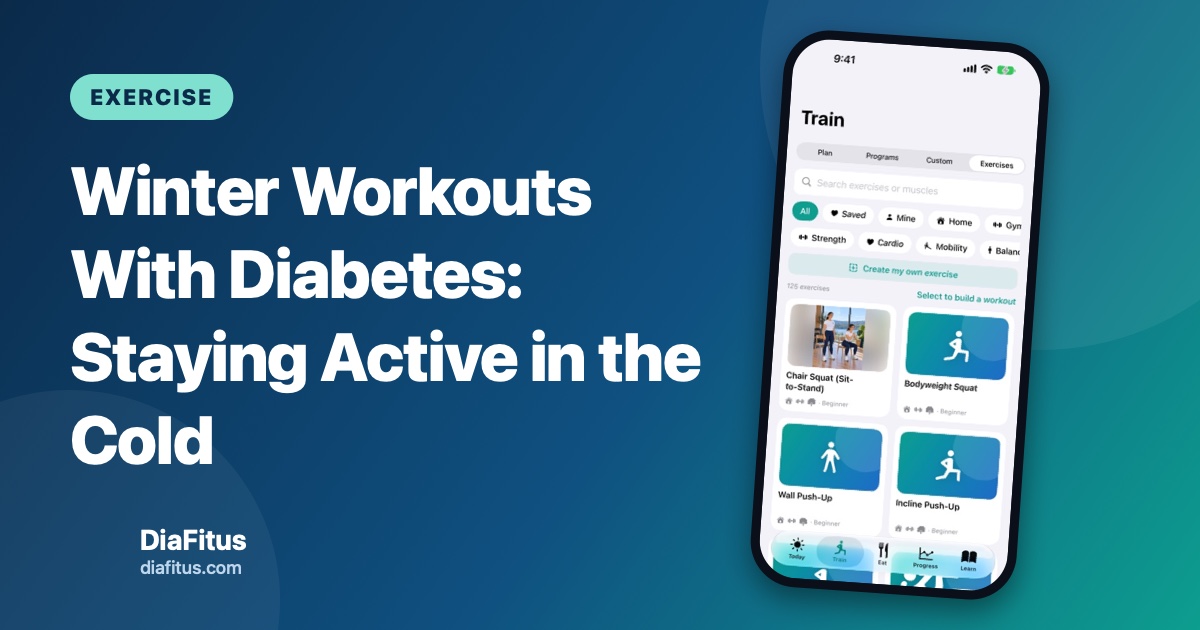
The DiaFitus app includes a library of exercises you can filter for home training, so a snowed-in day can still be a training day. You can explore the DiaFitus features to see how it fits your routine.
After your workout
Glucose can keep falling for hours after activity. The ADA statement highlights overnight lows after exercise as a particular concern for people who use insulin, and mentions a bedtime snack and continuous glucose monitoring among the ways to reduce the risk. Any change to insulin is a decision for you and your care team.
Winter afternoons get dark early, so an after-work session is effectively an evening workout. Check your glucose afterwards and again before bed, and keep quick carbohydrate by the bedside if lows are a risk for you.
The bottom line
Winter changes the details, not the goal. Check your glucose before and after, keep insulin and devices warm, protect your feet, and have an indoor plan ready for the worst days. If you are new to exercise, have complications such as neuropathy or heart disease, or notice your readings shift with the cold, talk to your doctor or diabetes care team before changing your routine.
This article is for general education and is not medical advice. DiaFitus is not a medical device and does not replace your care team.