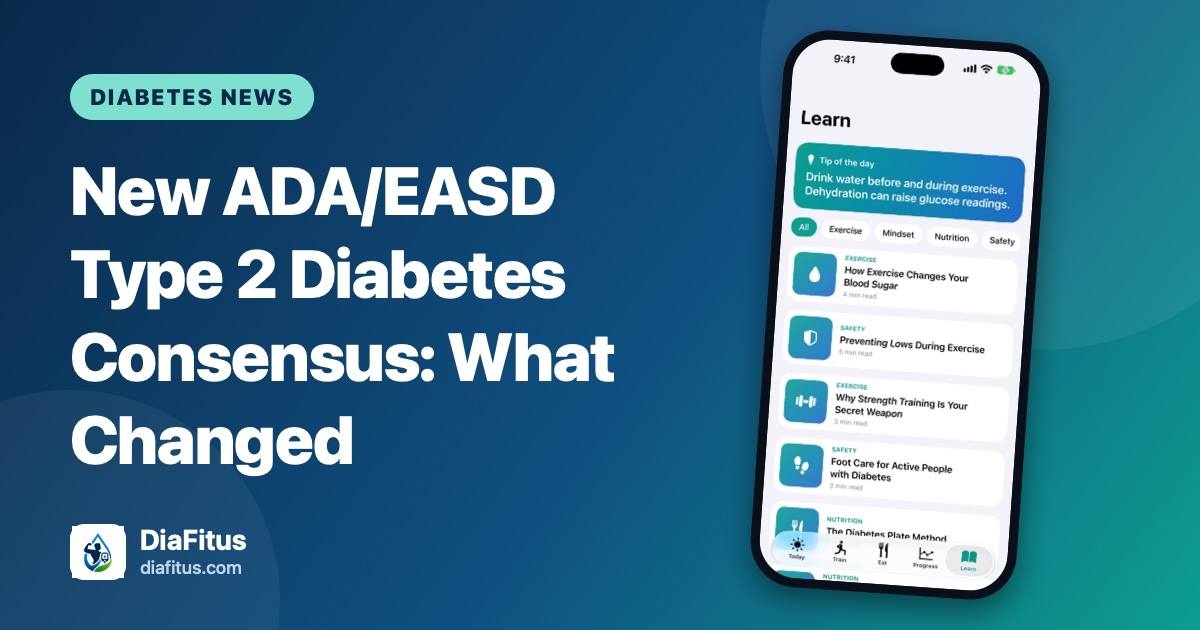
On October 2, 2026, the American Diabetes Association (ADA) and the European Association for the Study of Diabetes (EASD) published an updated joint consensus report on managing type 2 diabetes. It was presented at the EASD annual meeting in Milan and released at the same time in Diabetes Care and Diabetologia. Here is a plain-language look at the main changes.
Key takeaways
- The report looks beyond blood glucose to the whole person and the long-term conditions that can come with type 2 diabetes.
- It supports considering some newer medicines earlier, potentially from diagnosis, based on each person's risk profile.
- Healthy habits over a full 24 hours, including movement, eating and sleep, are described as a fundamental part of care.
- This is guidance for clinicians. Treatment decisions belong with you and your care team.
Who wrote it and why it matters
The ADA and EASD have issued joint consensus reports on type 2 diabetes for many years, and doctors around the world use them as a reference. The 2026 update was chaired by John Buse and Melanie Davies. The authors reviewed research published since 2022, so it reflects the newer evidence on heart, kidney and weight outcomes.
A wider view than blood glucose
The ADA says the report moves from managing high blood glucose alone to a broader approach to type 2 diabetes and the other long-term conditions linked with it. Areas it highlights include heart failure, liver disease, sleep apnea, mental health and dental health. In practice, this means appointments may cover more than an A1C number.
Medicines: earlier and more tailored
One of the most discussed changes is timing. The report supports considering SGLT2 inhibitors and GLP-1-based therapies earlier, potentially from diagnosis, because of their benefits for organs such as the heart and kidneys. Press coverage describes metformin as no longer a mandatory first step. For people who also have heart or kidney disease, the report suggests considering the two medicine types together.
The updated algorithm also covers other situations, for example where insulin typically fits in and when to reduce medicines that may carry higher low-glucose risk in frail older adults. These are details for your clinician to apply to your situation. Nothing here is a reason to start, stop or change any medicine on your own.
Weight as a care goal
Reports from the meeting say the document treats weight goals as being as important as glucose goals for many people, and it favours options that also help with weight. What is right for one person may not be right for another, so this is a conversation to have with your care team.
The 24-hour approach to healthy habits
The report promotes a 24-hour behaviour framework. In the authors' words, fundamental care includes healthy eating, 24-hour physical behaviours including sleep, avoiding tobacco and substance use, psychological support and weight management support. That fits what many people already find in daily life: a walk after a meal, regular strength sessions and a steady sleep routine each play a part. You can read more in our posts on post-meal walks and why exercise matters.
Glucose monitoring
According to summaries of the report, continuous glucose monitoring (CGM) should be considered, especially for people using insulin. If you are curious how sensors work, see our CGM basics guide.
What this means for you
- Guidelines guide doctors; they are not personal instructions. Ask your care team how the new report applies to you.
- If you have type 2 diabetes, it may be a good time to ask about heart, kidney, liver and sleep checks.
- Keep up the daily habits you can control. Movement, sleep and food choices all matter.
- If you take insulin or a sulfonylurea, check your glucose around exercise and ask your team about low-glucose risk.
DiaFitus is an exercise and wellness companion. It does not diagnose or treat diabetes and is not affiliated with the ADA or EASD. See DiaFitus features for how it can support your activity routine.