A continuous glucose monitor (CGM) is a small wearable that estimates your glucose every few minutes, day and night. Instead of a single fingerstick snapshot, you see a stream of readings, arrows showing where glucose is heading, and patterns over days and weeks.
Key takeaways
- A CGM measures glucose in the fluid between your cells, not directly in blood.
- Readings can lag behind a fingerstick by a few minutes, especially when glucose is changing fast.
- Time in range is a common CGM summary: the share of the day spent in your target range.
- The American Diabetes Association's 2026 Standards of Care widened who may benefit from CGM, including some adults with type 2 diabetes who do not use insulin.
How a CGM works
According to the National Institute of Diabetes and Digestive and Kidney Diseases (NIDDK), a CGM has three parts. A tiny sensor sits under the skin, often on the belly or upper arm, held in place by a sticky patch. A transmitter sends the data wirelessly. A software program on a smartphone, insulin pump or separate receiver shows the numbers and trends.
The sensor reads glucose in interstitial fluid, the fluid surrounding your cells. This is closely related to blood glucose, but not identical.
Why CGM readings lag
Glucose reaches your bloodstream first and moves into interstitial fluid afterwards. That means a CGM can run a few minutes behind a fingerstick. After a meal, during exercise, or when glucose is falling quickly, the gap can matter. Many devices suggest a fingerstick if symptoms do not match the reading, so follow your device instructions and your care team's advice.
Understanding time in range
Because a CGM records constantly, it can calculate time in range: how long you stay between your target limits without going too high or too low. The CDC and NIDDK note that for many people a common goal is about 70% of the day in range, roughly 17 hours. Your own targets may differ with age, pregnancy, other health conditions or hypoglycemia risk, so set them with your clinician.
Many people also look at time below range, since frequent lows are an important safety signal. Patterns across several days tell you more than any single reading.
Who may benefit
The ADA's Standards of Care in Diabetes 2026 recommend offering CGM at diagnosis and any time afterwards to adults who use insulin, who take medicines that can cause low glucose, or for whom CGM would help management. Research summarised in the guidelines found that adults with type 2 diabetes not using insulin also had better A1C and time in range with CGM than with fingersticks alone. Whether a sensor is right for you, and what your insurance covers, is a conversation for your care team.
Questions to ask before you start
- Which CGM suits my treatment and lifestyle?
- What alert thresholds should I use for highs and lows?
- When should I still check with a fingerstick?
- What is covered by my insurance or health plan?
- How do I share data with my care team?
Using CGM data with movement
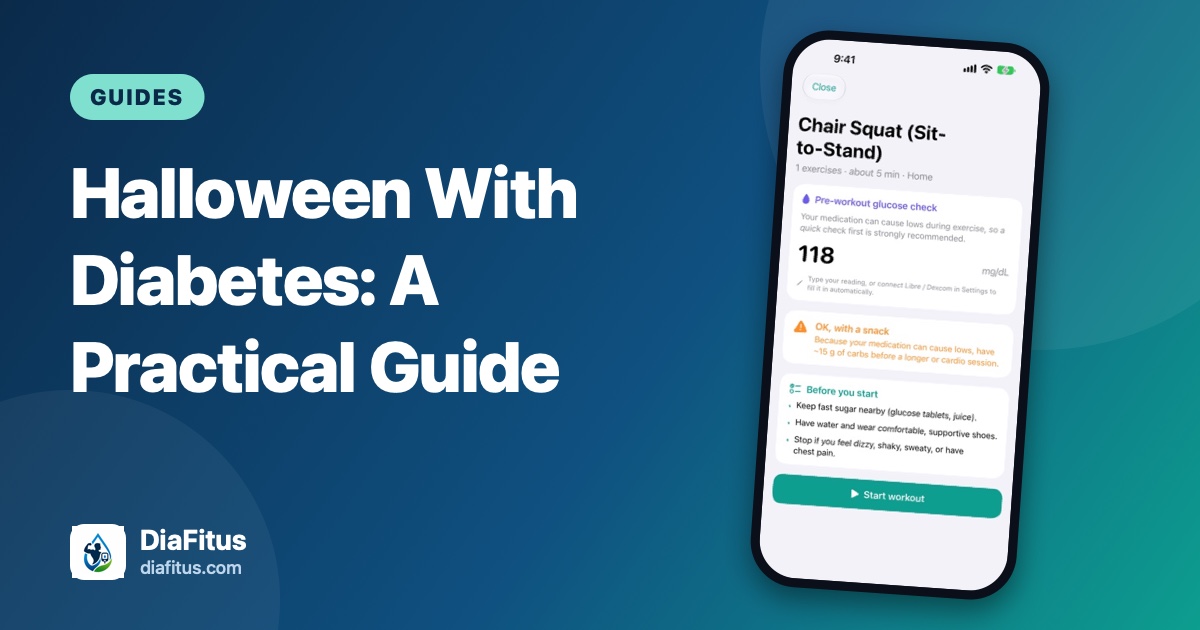
CGM trends can make exercise feel less guesswork, because you can see how a walk or workout affects your glucose. Check your reading before you start, keep fast-acting carbohydrate nearby if you use insulin or a sulfonylurea, and talk to your care team about low-glucose risk. See our guide on why moving matters so much with diabetes.
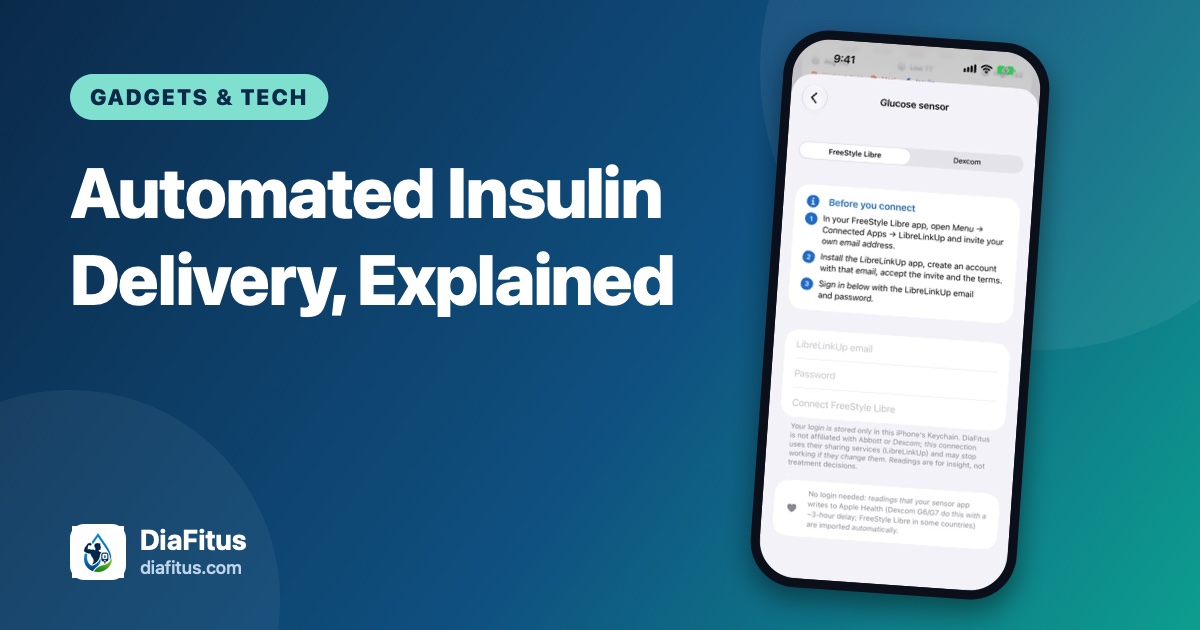
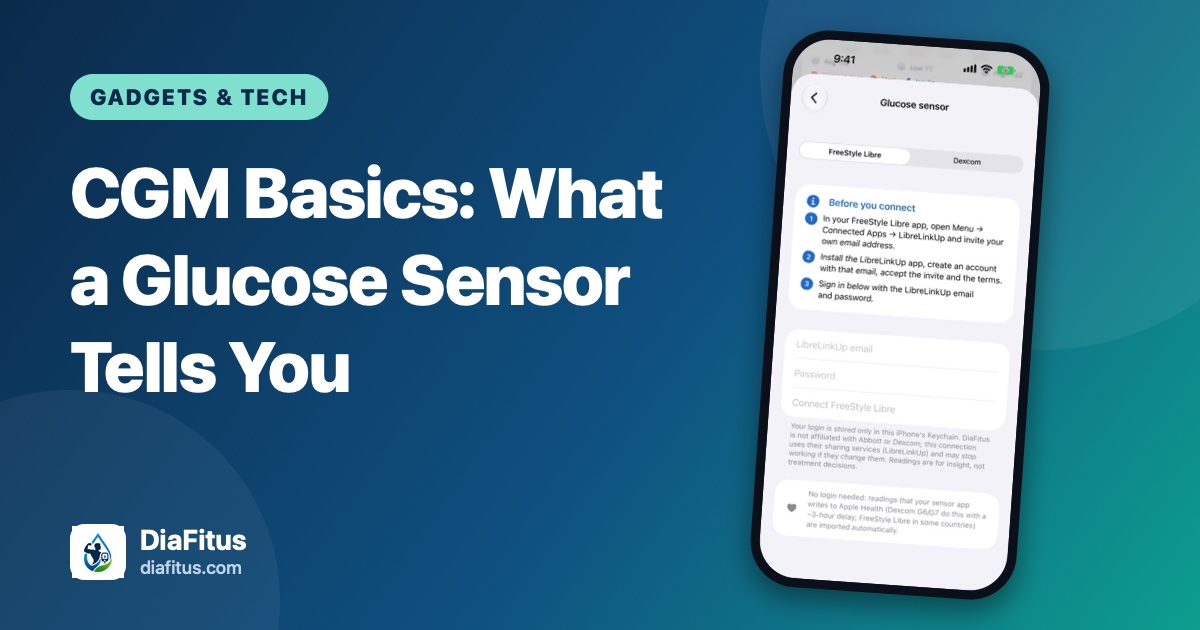
DiaFitus can import glucose readings from supported sensor apps so you can view them alongside your activity; see the DiaFitus features. Readings in DiaFitus are for insight, not treatment decisions, and DiaFitus is not affiliated with any sensor manufacturer.
The bottom line
A CGM is a tool that turns glucose into trends you can act on with your care team. Understand its lag, know your targets, and treat the numbers as a guide, not a verdict.