Fiber is the part of plant foods your body cannot fully digest, and it is one of the most useful nutrients for people managing diabetes. It may slow how quickly carbohydrate from a meal reaches your bloodstream, which can mean a gentler glucose rise. Here is what fiber does, how much to aim for, and simple ways to add more.
Key takeaways
- Fiber is a carbohydrate that is not digested into sugar the way starch and sugar are.
- Fiber-rich foods tend to be digested more slowly, which may help steady glucose after meals.
- The ADA Standards of Care point to about 14 grams of fiber per 1,000 calories as a general target.
- Add fiber gradually and drink water to avoid stomach discomfort.
What fiber does in the body
Most carbohydrates are broken down into glucose. Fiber is different: it passes through largely undigested. Soluble fiber, found in oats, beans, lentils and some fruit, forms a gel-like texture in the gut. Insoluble fiber, found in whole grains, nuts and vegetable skins, adds bulk and supports regular digestion.
Because fiber can slow digestion, foods that contain it often raise glucose more slowly than refined versions of the same food. Think of a slice of whole-grain bread compared with white bread, or a whole apple compared with apple juice. Individual responses vary, so your own glucose readings are the best guide.
How much fiber should you aim for?
The ADA Standards of Care recommend the general guideline of about 14 grams of fiber per 1,000 calories, which works out to roughly 25 to 38 grams a day depending on age, sex and energy needs. Some research suggests that intakes well above that, in the range of 35 to 50 grams a day, may offer extra glycemic benefit, but that is a lot to reach quickly and is not right for everyone.
On a US Nutrition Facts label, the Daily Value for fiber is 28 grams. The FDA considers 5% DV or less per serving low and 20% DV or more high, so a serving with about 5.6 grams or more counts as a good source. Our guide on reading a food label with diabetes shows where to find it.
Easy high-fiber foods
The NIDDK suggests filling half your plate with non-starchy vegetables such as leafy greens, peppers and green beans, and using the carb portion for high-fiber choices such as beans, whole grains, brown rice or fruit.
- Beans, lentils and chickpeas: add to soups, salads and bowls.
- Oats and intact whole grains: choose them over highly refined cereals.
- Vegetables: keep the skins on where you can.
- Whole fruit: berries, pears and apples rather than juice.
- Nuts and seeds: a small handful, mindful of calories.
Fiber and carb counting
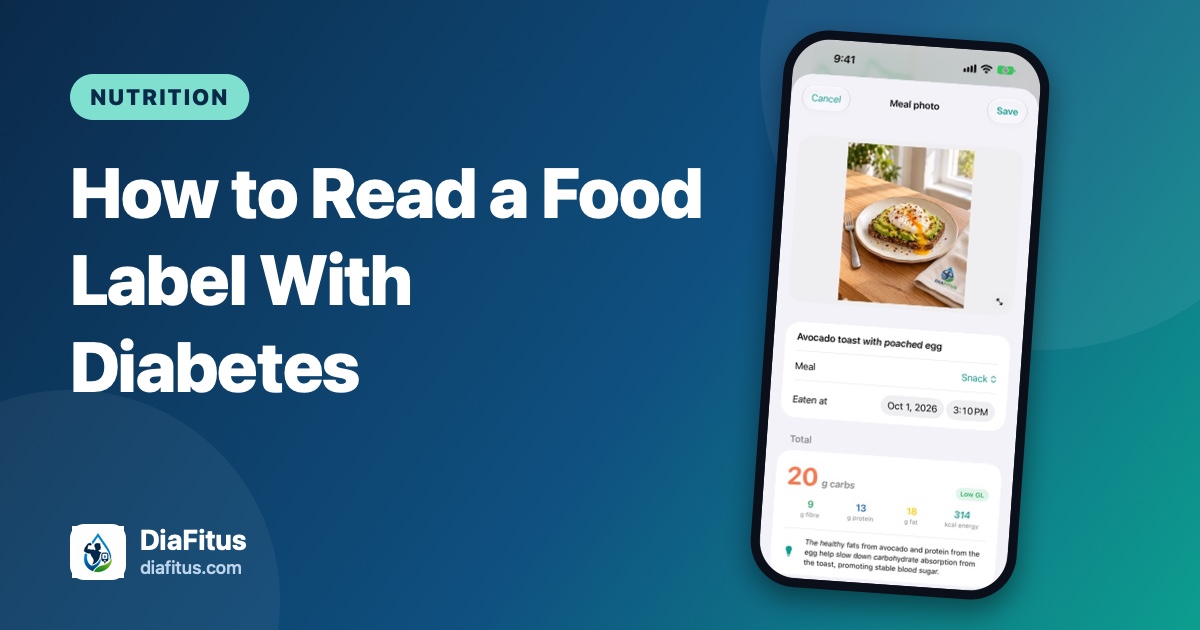
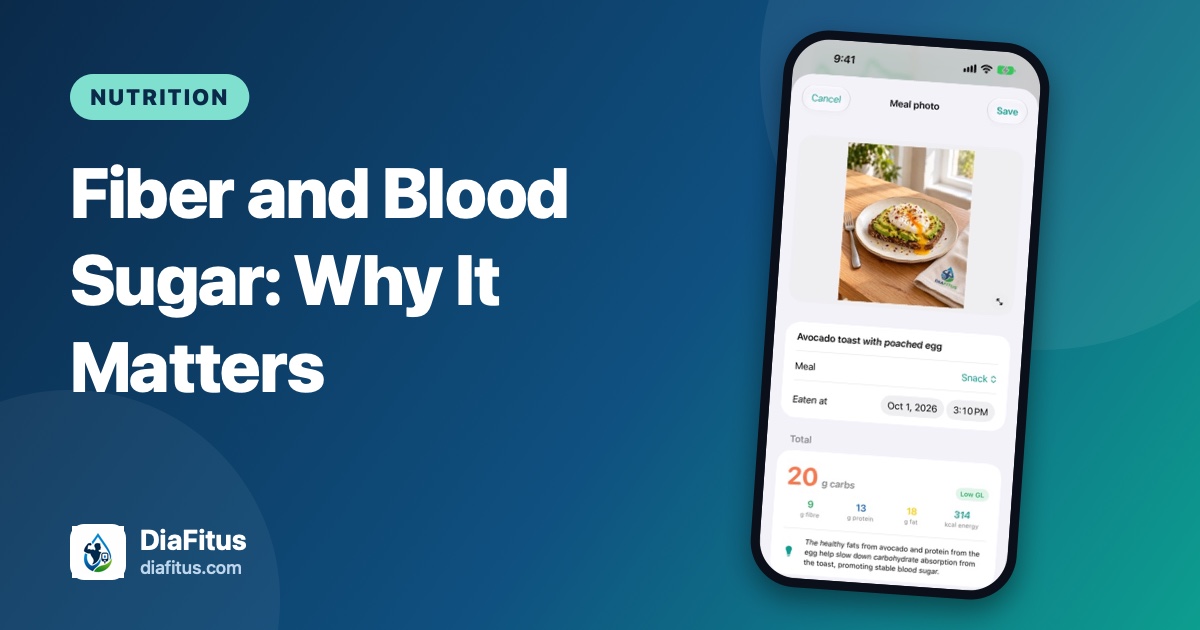
If you count carbohydrates, check with your diabetes care team about how to treat fiber in your own plan. Practices differ, and this is especially important if you use mealtime insulin, so do not change how you calculate doses on your own. Whatever method you use, logging meals alongside glucose readings can show you which high-fiber meals work well for you. In DiaFitus, a meal photo entry shows carbs, fibre, protein and fat estimates that you can keep with your glucose and exercise history.
Add fiber gradually
- Increase by a few grams every few days rather than all at once.
- Drink enough water, since fiber works best with fluids.
- Swap one refined item a day for a whole-food version.
- If you take diabetes medicines, keep an eye on your glucose as your diet changes and tell your care team about big shifts.
Supplements are not required for most people. Whole foods also bring vitamins, minerals and other nutrients.
Bottom line
Fiber is a simple, affordable tool that may support steadier glucose, digestion and heart health. Start small, notice how your body responds, and talk to your doctor, dietitian or diabetes care team before making major changes to how you eat. DiaFitus is educational and does not replace medical advice.