Colds, flu and stomach bugs can push glucose around even when you are doing everything right. The best time to prepare is before you feel ill, so this guide walks through a simple sick day plan you can build today and review with your diabetes care team.
Key takeaways
- Illness can raise glucose, and stress hormones can make levels harder to predict.
- Check glucose more often than usual while you are unwell, and keep a written log.
- The CDC advises checking for ketones with an over-the-counter kit if you are sick and your blood sugar is 240 mg/dL or above.
- High ketones can be an early sign of diabetic ketoacidosis (DKA), which is a medical emergency.
- Your care team should set your personal plan, including what to do about medication.
Why being sick affects glucose
When your body fights an infection, it releases stress hormones. These can make it harder for insulin to work, so glucose often runs higher than normal. Not eating much, vomiting or having diarrhea can also cause lows for some people, especially those on insulin or certain tablets.
That is why sick days feel unpredictable. A plan takes some of the guesswork out.
Build a sick day kit before you need it
Gather these in one box or bag so nothing needs to be found when you feel unwell:
- Your glucometer, strips and lancets (and spare batteries), plus spare sensors if you use a CGM.
- Ketone test strips or a ketone meter.
- Fast-acting carbohydrate such as glucose tablets or juice for lows.
- Sugar-free, caffeine-free drinks and some easy-to-eat foods.
- A thermometer and a list of your medicines.
- Phone numbers for your care team, pharmacy and after-hours line.
During illness: the basics
Check glucose more often
Many care teams suggest checking every few hours while you are sick, including through the night if you are unwell. Ask your team how often is right for you. Write down each reading with the time, what you ate or drank, and any symptoms. That log is useful if you need to call for advice.
Check ketones when glucose is high
The CDC says that if you are sick and your blood sugar is 240 mg/dL or above, you should use an over-the-counter ketone test kit. If ketones come back moderate or high, call your doctor right away. High ketones can be an early sign of DKA.
Keep drinking
Dehydration makes high glucose and ketones worse. Sip sugar-free, caffeine-free fluids regularly through the day. If you cannot keep fluids down, contact your care team.
Keep eating if you can
Try small amounts of easy foods such as soup, crackers, toast or applesauce. If you cannot eat normally, ask your care team in advance how to handle carbohydrates and whether sugary drinks should replace meals. Do not guess, because the answer depends on your treatment.
Do not change medicines on your own
Some people are told to keep taking insulin when ill, because they still need it. Others are given specific instructions about certain tablets during dehydration. Your doctor or diabetes educator is the right person to set these rules. This guide does not give dosing advice.
When to get help
Contact your care team promptly if:
- Ketones are moderate or high.
- Glucose stays high and does not come down.
- You cannot keep liquids or food down.
- You feel worse, or you are unsure what to do.
Seek emergency care if you have signs that may point to DKA or severe illness, such as persistent vomiting, fruity-smelling breath, fast or deep breathing, severe drowsiness or confusion, or abdominal pain. Do not wait to see if it passes.
Plan ahead for the season
- Ask your doctor about seasonal vaccines that are right for you.
- Wash hands often and stay away from sick people where possible.
- Check that your supplies are in date and your prescriptions are stocked.
- Write your plan down and share it with a family member or friend.
Where DiaFitus fits in
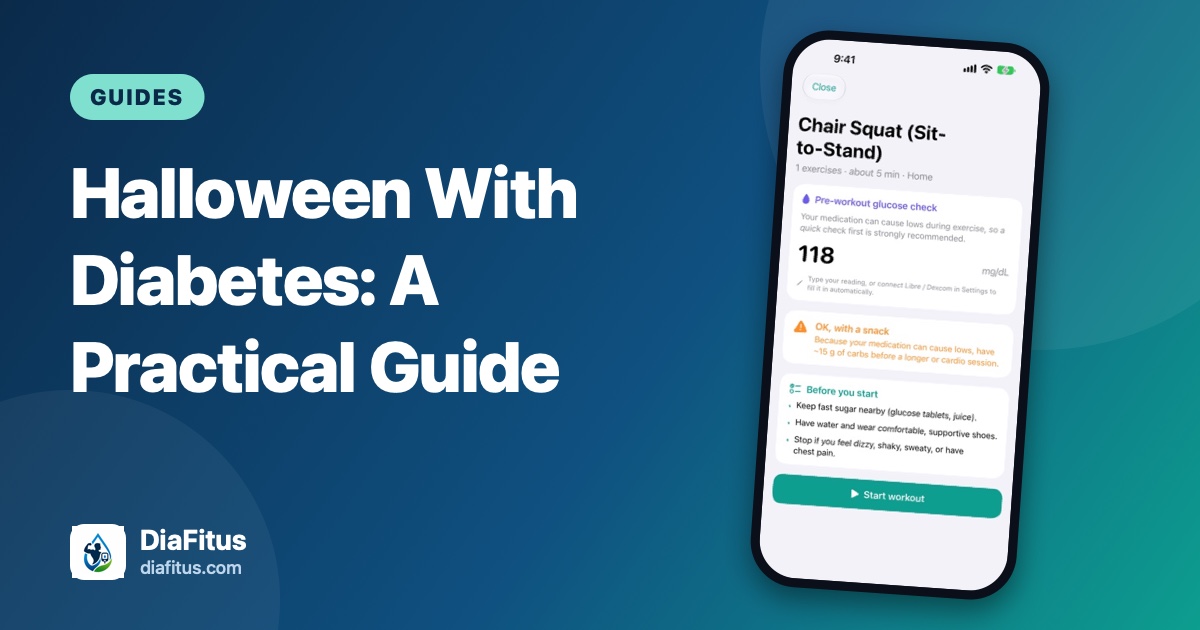
When you are sick, rest comes first, and you should skip workouts until you feel better and your glucose is stable. Once you are recovered, the DiaFitus app can help you ease back into gentle movement, with a pre-workout glucose check built into the workout flow. DiaFitus is an educational wellness tool: it does not diagnose or treat any condition and does not replace your care team or your CGM alarms. See our guide on CGM basics for more on reading sensor data.
The bottom line
A sick day plan is simple: stock a kit, check glucose often, test ketones when readings are high, drink fluids, and call your care team early. Review your plan with them before the next cold or flu arrives.